
-
×
 Growing Your Own Herbal Medicine By Chanchal Cabrera
1 × $30.80
Growing Your Own Herbal Medicine By Chanchal Cabrera
1 × $30.80 -
×
 The Self Publishing by Raman
1 × $30.80
The Self Publishing by Raman
1 × $30.80 -
×
 Dropship University by Cameron Conrad
1 × $30.80
Dropship University by Cameron Conrad
1 × $30.80 -
×
 Ecom Insiders By James Beattie
1 × $30.80
Ecom Insiders By James Beattie
1 × $30.80 -
×
 Create A Profitable Online Store Deluxe Package by Steve Chou
1 × $30.80
Create A Profitable Online Store Deluxe Package by Steve Chou
1 × $30.80 -
×
 Inner Circle with FREE Upscale Continuity Class by Kern
1 × $30.80
Inner Circle with FREE Upscale Continuity Class by Kern
1 × $30.80 -
×
 Creative Film Academy By Jose Javy Ferrer
1 × $30.80
Creative Film Academy By Jose Javy Ferrer
1 × $30.80 -
×
 8 Day Process - Living on Light - Online
1 × $30.80
8 Day Process - Living on Light - Online
1 × $30.80 -
×
 Spirit Junkie Masterclass By Gabrielle Bernstein
1 × $30.80
Spirit Junkie Masterclass By Gabrielle Bernstein
1 × $30.80 -
×
 The Realistic Trader - Crypto Currencies by Siam Kidd
1 × $30.80
The Realistic Trader - Crypto Currencies by Siam Kidd
1 × $30.80 -
×
 Super Seminar 2013 by Jay Abraham
1 × $30.80
Super Seminar 2013 by Jay Abraham
1 × $30.80 -
×
 Advanced Seminar by Market Geometry
1 × $30.80
Advanced Seminar by Market Geometry
1 × $30.80 -
×
 Critical Systems Engineering By Mechanical PE Exam Prep
1 × $62.00
Critical Systems Engineering By Mechanical PE Exam Prep
1 × $62.00 -
×
 New York Super Conference 2016 Videos
1 × $30.80
New York Super Conference 2016 Videos
1 × $30.80 -
×
 HVAC and Refrigeration Practice Problems for the Mechanical PE Exam Book By Mechanical PE Exam Prep
1 × $62.00
HVAC and Refrigeration Practice Problems for the Mechanical PE Exam Book By Mechanical PE Exam Prep
1 × $62.00 -
×
 Manifestation software by Peter Schenk
1 × $30.80
Manifestation software by Peter Schenk
1 × $30.80 -
×
 Healed By Katrina Ruth
1 × $30.80
Healed By Katrina Ruth
1 × $30.80 -
×
 Certificate Course in Optimal Aging: Evidence-Based Interventions for Older Adults by Carole Lewis
1 × $30.80
Certificate Course in Optimal Aging: Evidence-Based Interventions for Older Adults by Carole Lewis
1 × $30.80 -
×
 Generate Made Easy By Jonathan Jernigan
1 × $62.00
Generate Made Easy By Jonathan Jernigan
1 × $62.00 -
×
 NJ Foolish Wisdom By Joseph Riggio
1 × $30.80
NJ Foolish Wisdom By Joseph Riggio
1 × $30.80 -
×
 Cooperative Lease Options by Wendy Patton
1 × $30.80
Cooperative Lease Options by Wendy Patton
1 × $30.80 -
×
 Premium Forex Trading
1 × $30.80
Premium Forex Trading
1 × $30.80 -
×
 LinkedIn Training: Linkfluencer - 3 Steps To LinkedIn Mastery By Michelle Shakeshaft
1 × $30.80
LinkedIn Training: Linkfluencer - 3 Steps To LinkedIn Mastery By Michelle Shakeshaft
1 × $30.80 -
×
 Platinum Program Secrets By Elizabeth Purvis
1 × $30.80
Platinum Program Secrets By Elizabeth Purvis
1 × $30.80 -
×
 Awakening Osiris By Normandi Ellis
1 × $6.00
Awakening Osiris By Normandi Ellis
1 × $6.00 -
×
 Jade Egg Mastery Online Course By Saida Desilets
1 × $30.80
Jade Egg Mastery Online Course By Saida Desilets
1 × $30.80 -
×
 Social Media Marketing Agency by Tai Lopez
1 × $30.80
Social Media Marketing Agency by Tai Lopez
1 × $30.80 -
×
 Million Dollar Coaching by Glenn Livingston
1 × $30.80
Million Dollar Coaching by Glenn Livingston
1 × $30.80 -
×
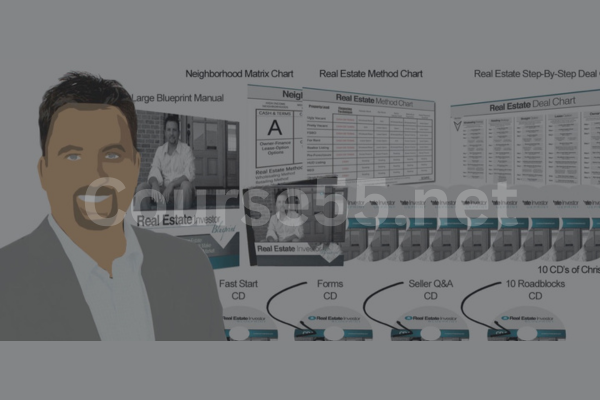 Real Estate Investor Blueprint Course By Chris Goff
1 × $30.80
Real Estate Investor Blueprint Course By Chris Goff
1 × $30.80 -
×
 Ultimate Mobile Home Bootcamp MHU by Steve Case and Corey Donaldson
1 × $30.80
Ultimate Mobile Home Bootcamp MHU by Steve Case and Corey Donaldson
1 × $30.80 -
×
 Simplistic Seduction Video Course By Chris Bale
1 × $15.40
Simplistic Seduction Video Course By Chris Bale
1 × $15.40 -
×
 Create Your Greatest Life by Les Brown
1 × $30.80
Create Your Greatest Life by Les Brown
1 × $30.80 -
×
 Basics & Beyond course By Maxwellzone
1 × $23.00
Basics & Beyond course By Maxwellzone
1 × $23.00 -
×
 Who’s Mailing What - Ultra Marketing Swipe File
1 × $30.80
Who’s Mailing What - Ultra Marketing Swipe File
1 × $30.80 -
×
 Membership Method 2018 by Chris Luck
1 × $30.80
Membership Method 2018 by Chris Luck
1 × $30.80
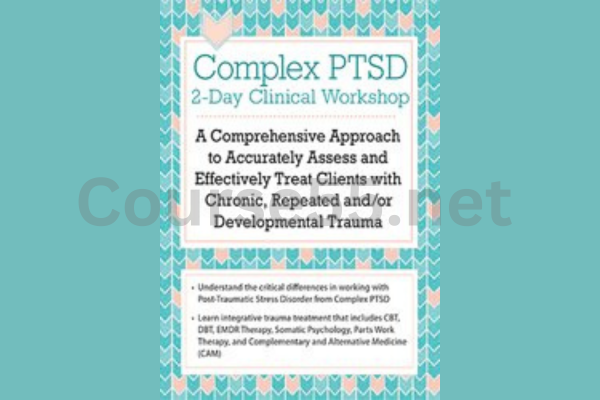
Complex PTSD Clinical Workshop: A Comprehensive Approach to Accurately Assess and Effectively Treat Clients with Chronic, Repeated and/or Developmental Trauma By Arielle Schwartz
Original price was: $299.00.$15.40Current price is: $15.40.
Complex PTSD Clinical Workshop: A Comprehensive Approach to Accurately Assess and Effectively Treat Clients with Chronic, Repeated and/or Developmental Trauma By Arielle Schwartz – Immediate Download!
Content Proof:

A Thorough Analysis of Dr. Arielle Schwartz’s Complex PTSD Clinical Workshop at PESI
Due in large part to its widespread effects on those who have endured recurrent, chronic, and developmental trauma, complex PTSD has attracted more attention in recent years. Dr. Arielle Schwartz’s “Complex PTSD Clinical Workshop: A Comprehensive Approach to Accurately Assess and Effectively Treat Clients with Chronic, Repeated and/or Developmental Trauma” provides insightful information on this difficult mental health issue. In addition to highlighting the complexities of comprehending complicated PTSD, this training gives therapists the tools they need to successfully establish therapeutic connections with their clients. For mental health practitioners, this training is a valuable investment since it combines information supported by research with useful tactics.
Dr. Schwartz stresses a strength-based approach in this class, which is essential for treating the symptoms of complicated trauma. Participants are motivated to actively interact with the information when an engaging learning environment is created, which improves their capacity to apply what they learn in practical clinical settings. Because it offers a framework that can accommodate diverse degrees of experience and expertise, this practical approach is very helpful for therapists at different phases of their careers.
Dr. Schwartz’s in-depth analysis of the differences between classic and complex PTSD is one of the workshop’s highlights. Therapists must have this knowledge in order to manage the complicated symptoms that frequently accompany complex trauma. For instance, complex PTSD usually entails emotional dysregulation, intrusive symptoms, and persistent interpersonal difficulties, whereas standard PTSD may present as avoidance and flashbacks. Understanding these distinctions helps therapists better adjust their methods to meet the individual demands of each client while also improving assessment abilities and informing therapy planning.
The course also explores the neurobiological components of trauma reactions, including ideas such as polyvagal theory. The foundation of successful therapies for individuals with complex PTSD is an understanding of how trauma affects the mind and body, which can be gained by therapists by investigating these frameworks. By combining psychological and physiological viewpoints, the therapist’s toolkit for treatment is expanded, increasing their efficacy overall.
Key Components of the Workshop
Symptom Recognition and Intervention Techniques
Understanding the common symptoms associated with complex PTSD is critical. Participants at the workshop learn about emotional dysregulation, intrusive symptoms, avoidance mechanisms, and challenges in interpersonal relationships. Recognizing these traits is fundamental to creating effective treatment plans. Through interactive sessions, participants engage in discussions and case studies that reinforce the importance of symptom recognition in crafting individualized therapeutic approaches.
Furthermore, Dr. Schwartz offers a comprehensive suite of therapeutic interventions designed specifically for complex PTSD. Variants of Cognitive-Behavioral Therapy (CBT), Dialectical Behavioral Therapy (DBT), Eye Movement Desensitization and Reprocessing (EMDR), and various somatic techniques are thoroughly examined. Workshop participants have the opportunity to practice these modalities, receiving immediate feedback to help refine their skills. The emphasis here is on integrative treatment planning, ensuring that therapists can accommodate the unique histories and circumstances of their clients.
Building Compassionate Therapeutic Relationships
A standout feature of Dr. Schwartz’s approach is her focus on the therapeutic relationship. Successful treatment hinges on establishing a compassionate and trusting connection between therapist and client. During the workshop, techniques for building rapport and fostering a supportive environment are explored in depth. Participants engage in role-playing exercises that simulate real clinical scenarios, thereby highlighting the nuances of emotional intelligence and attunement necessary for effective therapy.
An essential aspect of this compassionate approach is the development of stabilizing resources for clients. Dr. Schwartz encourages therapists to equip clients with coping strategies that allow them to process their trauma without becoming overwhelmed. This strategic focus on resource-building enables clients to navigate their healing journey more safely, substantially reducing the risk of re-traumatization during therapy sessions.
Improving Self-Care for Therapists
Schwartz’s course also addresses a crucial topic that is frequently disregarded in trauma work: the importance of therapist self-care. The possibility of vicarious trauma might seriously impair a therapist’s efficacy and well-being. The session presents a range of self-care practices that therapists can use in their personal life as well as when interacting with clients. Therapists can better serve their clients by staying focused and emotionally stable.
A discussion of mindfulness-based therapies that therapists might apply to their everyday practices is also included in the session. In addition to strengthening the therapist’s emotional fortitude, mindfulness practice creates a therapeutic presence that is advantageous to clients. For instance, therapists might approach their work with an open heart and a clear mind by using the grounding techniques and brief meditation exercises covered in the course before sessions.
Conclusion
Attendees of Dr. Arielle Schwartz’s workshop leave with a renewed sense of competence and confidence, armed with a diverse array of tools to navigate the complexities of treating clients with chronic trauma. The workshop is not just an academic exercise but a transformative experience that fosters both professional growth and personal insight for therapists. With its well-rounded blend of theoretical knowledge, practical strategies, and foundational self-care techniques, this comprehensive workshop stands out as an essential opportunity for any mental health professional dedicated to enhancing their practice in the realm of complex PTSD treatment.
In summary, this workshop lays the groundwork for a deeper understanding of complex trauma and equips therapists to meet the unique challenges posed by clients who have endured chronic trauma. The expertise provided by Dr. Schwartz, combined with the interactive learning format, makes this workshop an invaluable resource for therapists looking to make a real difference in the lives of their clients.
Frequently Asked Questions:
Business Model Innovation: We use a group buying approach that enables users to split expenses and get discounted access to well-liked courses. Despite worries regarding distribution strategies from content creators, this strategy helps people with low incomes.
Legal Aspects: There are many intricate questions around the legality of our actions. There are no explicit resale restrictions mentioned at the time of purchase, even though we do not have the course developers’ express consent to redistribute their content. This uncertainty gives us the chance to offer reasonably priced instructional materials.
Quality Control: We make certain that every course resource we buy is the exact same as what the authors themselves provide. It’s crucial to realize, nevertheless, that we are not authorized suppliers. Therefore, our products do not consist of:
– Live coaching calls or sessions with the course author.
– Access to exclusive author-controlled groups or portals.
– Membership in private forums.
– Direct email support from the author or their team.
We aim to reduce the cost barrier in education by offering these courses independently, without the premium services available through official channels. We appreciate your understanding of our unique approach.
Be the first to review “Complex PTSD Clinical Workshop: A Comprehensive Approach to Accurately Assess and Effectively Treat Clients with Chronic, Repeated and/or Developmental Trauma By Arielle Schwartz”
You must be logged in to post a review.
Related products
Original price was: $699.00.$30.80Current price is: $30.80.
Original price was: $997.00.$30.80Current price is: $30.80.
Original price was: $497.00.$30.80Current price is: $30.80.
Original price was: $300.00.$30.80Current price is: $30.80.
Original price was: $597.00.$30.80Current price is: $30.80.
Original price was: $499.00.$62.00Current price is: $62.00.
Original price was: $891.00.$30.80Current price is: $30.80.
Reviews
There are no reviews yet.